Comprehensive CitationsTrusted SourcesBuilt for EM

Structured answers.
With receipts.

FOAM Cortex turns bedside questions into succinct, cited, stepwise guidance grounded in the FOAMed sources emergency clinicians actually use.

foamcortex.com

How do I use ultrasound for subclavian central line access?

Summary

Ultrasound guidance improves success and safety in subclavian (often accessed via the axillary vein in its proximal segment) catheterization by allowing real-time visualization of the target vein, adjacent structures, and the advancing needle.

Indications
  • Difficult peripheral IV access (e.g., thrombosed veins)
  • Need for low-infection risk central access (per CDC guidelines)
  • Contraindications or challenges for IJ/femoral access (trauma, cervical immobilization)
Contraindications
  • Coagulopathy
  • Overlying infection or local chest wall abnormalities
Complications
  • Pneumothorax
  • Vascular injury (arterial puncture)
  • Hematoma or catheter-related thrombosis

Equipment

  • Essential: High-frequency (5–10 MHz) linear transducer, sterile ultrasound probe cover, central venous catheter kit (needle, guidewire, dilator, catheter)
  • Optional: Micropuncture kit, power Doppler feature

Positioning and Landmarks

  • Position: Patient supine, ideally in Trendelenburg with arms in a neutral or slightly shrugged position to help expose the subclavian/axillary window
  • Landmarks/US: Initially place the probe in the sagittal plane over the mid-clavicular area to visualize the clavicle, pleural line, and then slide laterally to identify the axillary vein (transitioning into the subclavian vein as it passes the lateral border of the first rib) 12

Analgesia/Sedation

OptionWhenKey note
Local anesthetic (e.g., lidocaine)Prior to needle insertionEnsure adequate skin and soft tissue anesthesia to minimize patient discomfort
Minimal sedationIf patient is anxious or uncooperativeUse with caution so as not to compromise respiratory drive in critically ill patients

Steps

  1. Pre-scan and Preparation:
    Identify the intended access site by scanning over the mid to lateral clavicle. Visualize the clavicle, pleural line, and then the axillary vein with adjacent artery using grayscale and color Doppler to confirm vessel identity 12.

  2. Probe Placement:
    Begin with the probe in a sagittal orientation over the middle third of the clavicle (marker cephalad) to locate key landmarks, then slide laterally until the acoustic shadow of the clavicle clears, revealing the compressible axillary vein 1.

  3. Switch to Long-Axis View:
    Rotate the probe 90° into the long-axis position to align with the targeted vein, ensuring the needle path can be visualized continuously. This helps in keeping track of the needle tip as you advance it 13.

  4. Needle Insertion:
    Under continuous ultrasound visualization, advanced the needle slowly using an in-plane technique. Watch for the needle tip entering the vein while ensuring it remains in view. Adjust the probe slightly if the needle tip is lost, using incremental “walking the needle” technique.

  5. Guidewire and Catheter Placement:
    Once venous return is confirmed, thread the guidewire through the needle. Verify the wire position via ultrasound if possible. Proceed with dilation and catheter placement while maintaining sterile technique 12.

Post-procedure

  • Confirm: Use ultrasound and chest radiography to confirm catheter placement and exclude complications such as pneumothorax
  • Aftercare: Secure the line with sutures and appropriate dressing while maintaining sterility
  • Re-check: Monitor the patient's respiratory status and catheter position regularly

Keep exploring

Browse real emergency questions and answers.

Then ask your own and get a cited response in seconds.

Trusted in EM. Designed for speed.

Your answers are built from recognized FOAMed content, not black-box guesswork.

Built by and for emergency clinicians

FOAM Cortex gives you fast, clinically usable answers for acute care, with structure, citations, and controls you won't get from others.

To the point

Succinct for Critical Decisions

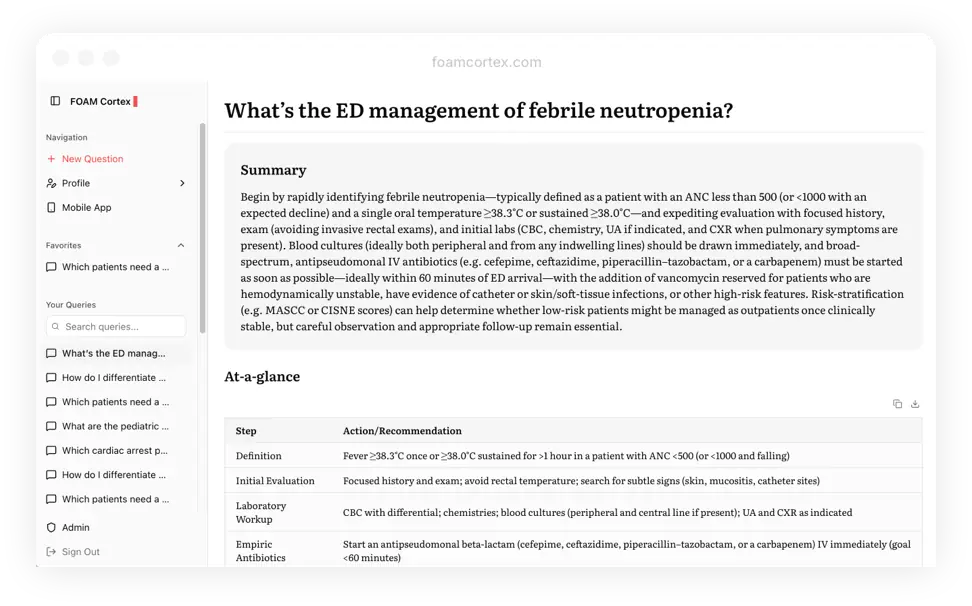
FOAM Cortex delivers concise, decision-ready answers for emergency care, not bloated AI essays that waste time when minutes matter.

Succinct critical decisions screenshot
Efficient

Structured to Your Question

Each response is organized around what you asked, with clear sections you can scan in seconds and apply immediately.
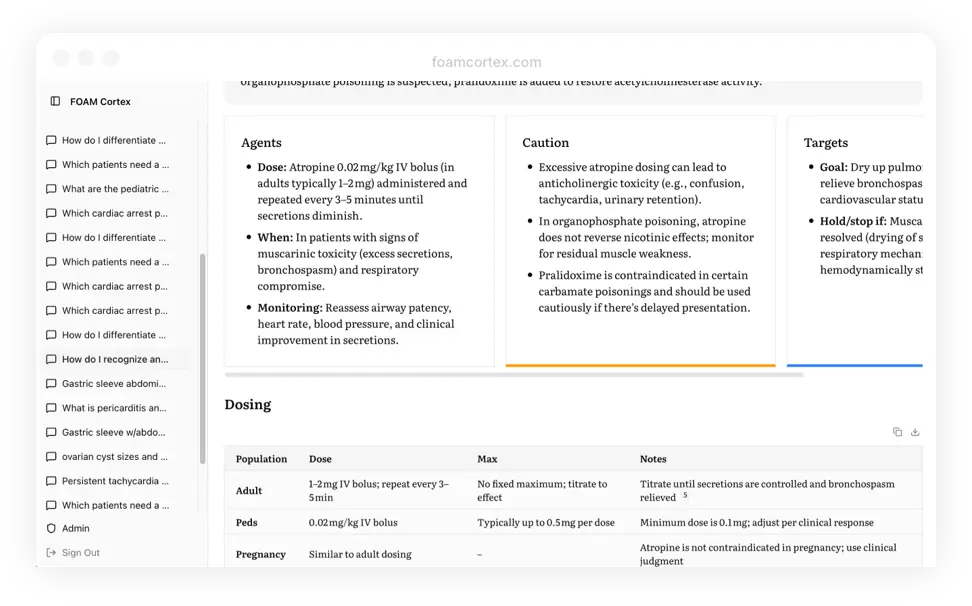

Structured response screenshot
Customizable

Evidence Controls You Can Tune

Set how many references you want, prioritize newer evidence, and adjust source weighting to match your clinical context.
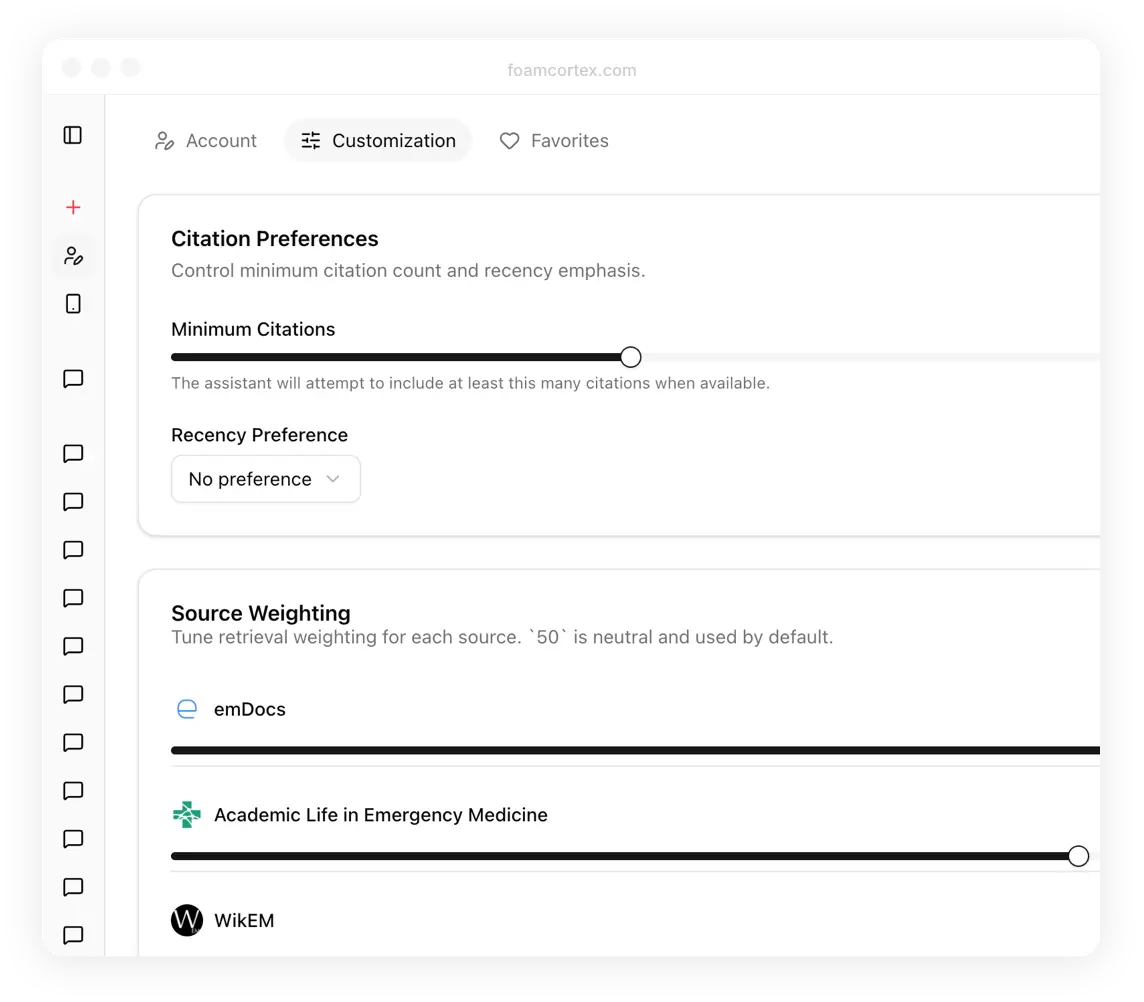
Customization settings screenshot
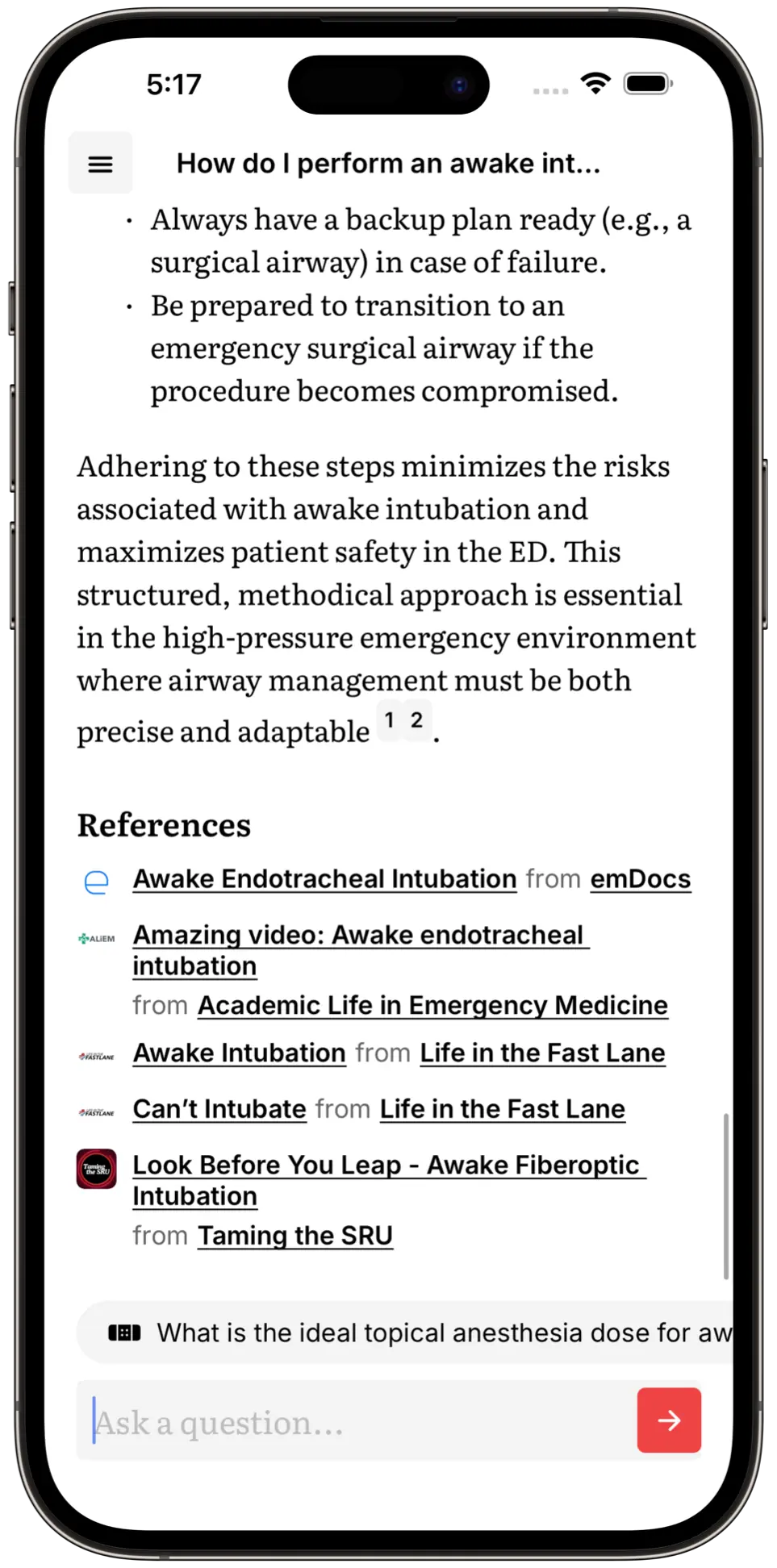
Mobile app screenshot
On the go

Designed for on-shift use

FOAM Cortex is optimized for on-the-go emergency practice, so you can quickly pull evidence, review structured answers, and make decisions without breaking workflow.

Free Download
FOAM Cortex for institutions

Scale Emergency Expertise Across Your Team

Combine trusted FOAM evidence with your organization's protocols and priorities to deliver answers that are both high quality and locally actionable.

Custom content

Ingest your protocols, policies, pathways, and internal documents so answers align with institutional standards.

PDF
DOCX
HTML
CSV
MD
PPTX
PDF
DOCX
HTML
CSV
MD
PPTX
PDF
DOCX
HTML
CSV
MD
PPTX
PDF
DOCX
HTML
CSV
MD
PPTX
HTML
CSV
MD
PPTX
XLSX
TXT
PDF
DOCX
HTML
CSV
MD
PPTX
XLSX
TXT
PDF
DOCX
HTML
CSV
MD
PPTX
XLSX
TXT
PDF
DOCX
HTML
CSV
MD
PPTX
XLSX
TXT
PDF
DOCX

Your priorities

Set retrieval priorities so institutional guidance is ranked first and response quality stays consistent.

Minimum citations

Source weighting

Group custom content96
FOAM references54

User and access management

Control invites, role-based permissions, and audit visibility across teams and services.

ActorActionWhen
a.nguyen
Invite sent2m ago
m.lee
Policy changed9m ago
j.patel
Query executed11m ago
s.cho
Source disabled21m ago
k.ross
Invite accepted32m ago
r.adams
Branding updated47m ago
a.nguyen
Invite sent2m ago
m.lee
Policy changed9m ago
j.patel
Query executed11m ago
s.cho
Source disabled21m ago
k.ross
Invite accepted32m ago
r.adams
Branding updated47m ago
a.nguyen
Invite sent2m ago
m.lee
Policy changed9m ago
j.patel
Query executed11m ago
s.cho
Source disabled21m ago
k.ross
Invite accepted32m ago
r.adams
Branding updated47m ago
a.nguyen
Invite sent2m ago
m.lee
Policy changed9m ago
j.patel
Query executed11m ago
s.cho
Source disabled21m ago
k.ross
Invite accepted32m ago
r.adams
Branding updated47m ago
Learn More

Ready to get started?

Sign up free and get immediate access to rapid, structured emergency medicine decision support.